
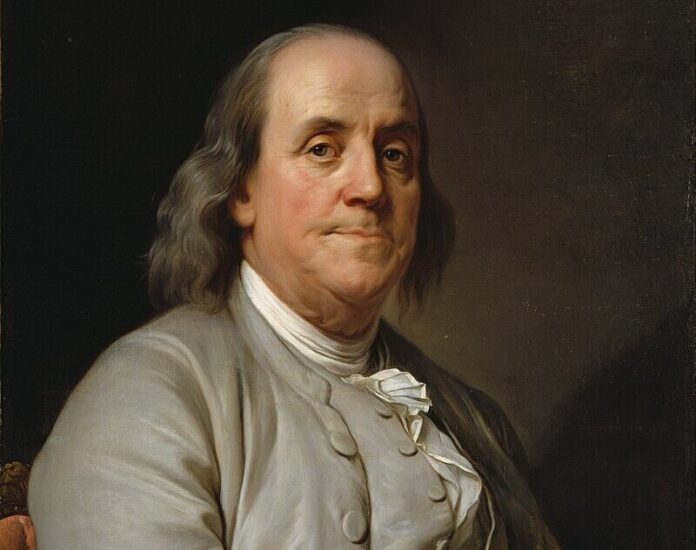

Benjamin Franklin, Founding Father of the United States, spent a significant period of his life (from the mid-1750s to mid-1770s) living in London, UK. During that time, he lived almost exclusively in a house at 36 Craven Street, where skeletons of at least 15 people were discovered more than 200 years later.
In 1997, Franklin’s house at 36 Craven Street was subject to renovation works as part of efforts to turn it into a museum. But once the workers reached the basement, they found a pit that contained human bones. After further excavation, more than 1,200 human bone pieces were unearthed.
At first, it was believed that the pit might have served as a burial for victims of a serial killer. But upon further forensic examination, it was discovered that the bones, belonging to at least 15 different persons, were dated back to the 18th century, approximately around the time Franklin lived there. This posed a question of whether the Founding Father had a dark side no one previously knew about.
It turned out that there was quite a simple explanation for this. The bones were actually part of the anatomy practice that anatomist William Hewson, who was the son-in-law of Franklin’s landlady, was running at 36 Craven Street.
Anatomy was still in its infancy in the 18th century and largely frowned upon by the public and scientific community. Hewson was likely obtaining bodies from gravediggers and studying them in the basement before burying the remains to avoid the risk of being ousted. It was a perfect location for his experiment, as he knew his mother-in-law and Franklin, with whom he developed friendship, wouldn’t tell on him.
Experts believe that Franklin didn’t take part in Hewson’s research, although as a curious man he was, it wouldn’t be a surprise if he had checked one or two sessions.